
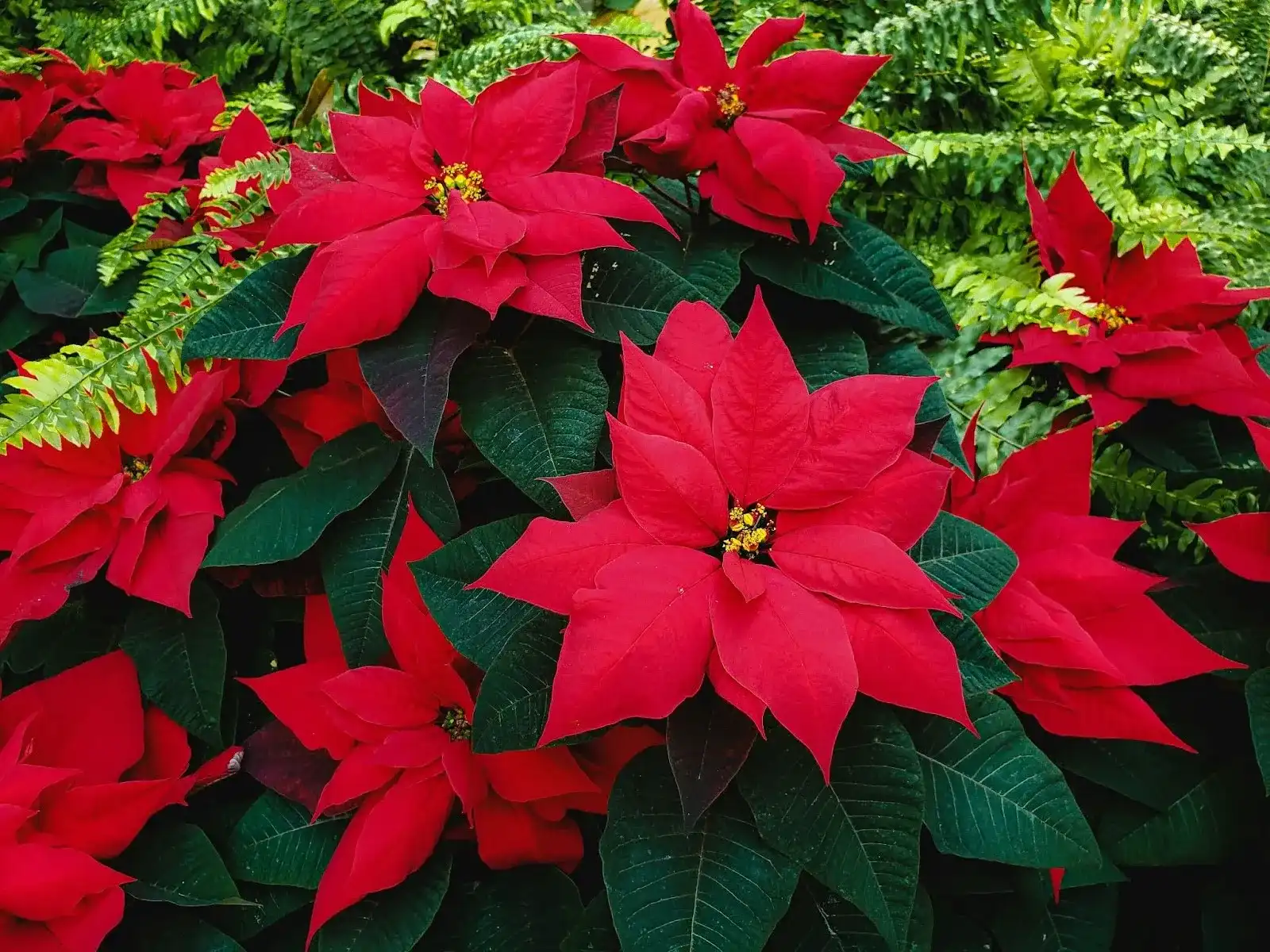
Why are poinsettias Christmas flowers? The connection stems from a Mexican legend about a young girl named Pepita who could only offer weeds to the church altar. Miraculously, these weeds turned into crimson blooms.
Historically, an American diplomat named Joel Roberts Poinsett brought the plant from Mexico to the US, solidifying its fame. Their star-shaped leaves symbolise the Star of Bethlehem. Today, they are the global standard for festive floral decor, representing good cheer, success, and the holiday spirit.
In this guide, you will have a good idea why the poinsettia is considered the epitome of Christmas flowers.
The History and Legend of the Christmas Flower
When we look at festive decorations in Singapore, the bright red potted plants are as common as artificial pine trees. However, the story behind these plants is quite old and spans different continents. Understanding the history of poinsettia Christmas flower traditions helps us appreciate why they sit on our office desks and dining tables every December.
The Mexican Legend of Pepita
The most famous story associated with this plant is the Legend of Pepita. According to Mexican folklore, a poor girl named Pepita (sometimes called Maria) wanted to bring a gift to the baby Jesus at the Christmas Eve service. She had no money and felt ashamed that she could not offer anything of value.
Her cousin tried to comfort her, suggesting that even a humble gift given with love is acceptable. Pepita gathered a handful of common weeds from the roadside and fashioned them into a small bouquet. As she placed the weeds at the altar, they miraculously transformed into brilliant red blooms. The congregation believed they had witnessed a miracle. From that day on, the bright red flowers were known as Flores de Noche Buena, or “Flowers of the Holy Night.” This touching story anchors the legend of the poinsettia in themes of humility and faith.
Joel Roberts Poinsett and the Name Origin
While the plant is native to Mexico, its English name comes from an American figure. Joel Roberts Poinsett was the first United States Minister to Mexico. He was an amateur botanist with a keen eye for new plant species. In 1828, during a trip to Southern Mexico, he encountered the striking red shrub growing wild.
He was so impressed by its appearance that he sent cuttings back to his home in South Carolina. He began propagating the plants and sending them to friends and botanical gardens. Although the plant had a scientific name, Euphorbia pulcherrima, it eventually became known by the name of the man who introduced it to the English-speaking world: Poinsett.
The Star of Bethlehem Connection
Beyond the folklore of Pepita, there is a strong religious association that answers why are poinsettias Christmas flowers. Christian observers often interpret the shape of the poinsettia flower as a symbol of the Star of Bethlehem. This was the celestial body that led the Wise Men to Jesus.
The leaves, or bracts, radiate outwards in a star-like pattern. This shape makes it a perfect visual representation for religious holiday displays. It serves as a reminder of the nativity story, making it a staple in churches and homes during the Advent season.
It Is Not Actually a Flower
It might surprise many to learn that the large red parts of the plant are not petals. To provide proper poinsettia care indoors, it helps to understand the anatomy of the plant.
Understanding Bracts vs. Petals
The colourful parts of the poinsettia that we admire are modified leaves called bracts. Their primary function in nature is to attract insects to the true flowers. If you look closely at the centre of the coloured bracts, you will see small, yellow, button-like buds. These are the actual flowers, scientifically known as cyathia.
When selecting a Christmas flower Singapore gift, you should check these yellow centres. If the cyathia are tight and green or yellow, the plant is fresh. If they look brown or have fallen off, the plant is past its prime. The bracts change colour in response to shorter daylight hours, a process called photoperiodism. This natural cycle aligns perfectly with the winter solstice in the Northern Hemisphere, making them bloom naturally in December.
Poinsettias in the Wild vs. Potted Gifts
In their native habitat in Mexico and Central America, poinsettias are not small potted plants. They are large woody shrubs or small trees that can reach heights of 3 to 4 metres. They grow in deciduous tropical forests.
The varieties we buy in Singapore nurseries or florists have been bred specifically to be compact and bushy. Growers use growth regulators to keep them small enough to fit on a coffee table. This modification makes them excellent gifts for HDB flats and offices where space is limited.
Meaning and Symbolism of Poinsettias

When you send a hamper or a floral arrangement, the meaning behind the bloom matters. The poinsettia flower meaning has evolved over the centuries, blending religious devotion with modern sentiments of celebration.
Religious Significance
In religious contexts, the colours of the poinsettia hold specific meanings. The deep red colour is said to represent the blood of Christ, signifying his ultimate sacrifice. This ties the flower to the theological aspects of Christmas.
The white poinsettia, though less common than the red, represents purity and innocence. It is often linked to the Virgin Mary. These interpretations make the plant a thoughtful gift for families who hold the religious aspects of the holiday in high regard.
Modern Gifting Meanings
In secular settings, the poinsettia has become a universal symbol of good cheer, success, and mirth. Gifting a bright red poinsettia to a colleague or business partner signals a wish for prosperity and happiness in the coming year.
Additionally, the poinsettia is the birth flower for December. If you know someone with a birthday in the final month of the year, a poinsettia bouquet or potted plant acts as a dual-purpose gift, celebrating both their special day and the festive season.
Poinsettias in Singaporean Christmas Celebrations
Living in the tropics presents unique challenges and opportunities for festive decorating. We do not have snow, but we do have a love for vibrant celebrations. The Christmas flower Singapore market adapts these winter traditions to fit our warm, humid environment.
Adapting Winter Traditions to the Tropics
Singaporeans love to bring the “winter feel” indoors. Since we cannot have natural pine forests, we rely on visual cues. The deep red of the poinsettia contrasts beautifully with the green of artificial Christmas trees or tropical houseplants.
In HDB flats and condominiums, large decorations can be cumbersome. Poinsettias offer a high-impact visual with a small footprint. A single potted plant on a TV console or a shoe rack instantly signals that the house is ready for visitors. They are also popular because they are relatively affordable compared to imported temperate cut flowers, making them accessible for mass decoration in shopping malls and community centres.
Popular Poinsettia Colours for Gifting
While red remains the king of Christmas, modern hybrids offer a spectrum of choices for picky homeowners.
- Red: This is the classic choice. It matches the traditional Christmas palette of red, green, and gold. It is the safest bet for corporate gifting or traditional family members.
- White and Cream: These varieties offer a sophisticated, elegant look. They fit well in modern, minimalist Singaporean homes with Scandinavian or industrial interiors.
- Pink and Marbled: Known as “glitter” or “jingle bell” varieties, these have speckled or variegated bracts. They are quirky and fun, making them excellent gifts for younger families or creative friends who prefer unique decor.
Caring for Your Poinsettia Gifts and Decor

Many people treat poinsettias as disposable decorations, throwing them away once the leaves drop. With the right poinsettia care indoors, these plants can last well past the Lunar New Year. The key is to manage their environment, which can be tricky in Singapore’s climate.
The Ideal Indoor Environment in Singapore
The biggest enemy of the poinsettia in Singapore is the drastic temperature change between the hot outdoors and air-conditioned indoors.
Temperature: Poinsettias prefer cool temperatures, ideally between 18°C and 22°C. This makes them happy in an air-conditioned room. However, they hate cold drafts. You must avoid placing the plant directly under the air-con vent or near a fan that blows directly on it. The dry, cold air will cause the bracts to wither and drop prematurely.
Light: These plants need bright, filtered light to maintain their colour. A spot near a window with sheer curtains or a glass balcony door is perfect. If you put them in a dark corner, they will become leggy and lose their leaves. If you place them in direct midday sun, the intense heat can scorch the delicate bracts.
Watering Tips for Potted Displays
Overwatering is the fastest way to kill a poinsettia. In our humid climate, soil does not dry out as fast as it might in drier countries.
The Finger Test: Before watering, press your finger into the soil. If it feels moist, do not water it. Only water when the top inch of soil feels dry to the touch.
Avoid Wet Feet: Poinsettias are often sold in pots wrapped in foil or plastic sheets. This wrapping can trap water at the bottom. If the roots sit in standing water, they will rot. Always remove the decorative wrapping when watering, allow the pot to drain completely in the sink, and then return it to the display area. This simple step is vital for longevity.
How to Care for Cut Poinsettias in Vases
While usually sold as potted plants, poinsettia cut flower care is becoming a topic of interest for those who want to create floral arrangements. Poinsettias have a milky sap that leaks when the stem is cut. This sap can clog the stem and prevent the flower from drinking water, leading to wilting within hours.
The Searing Technique: To make cut poinsettias last, you must stop the sap flow immediately after cutting.
- Cut the stem to the desired length.
- Immediately dip the cut end into boiling water for about 20 seconds, or hold the end over a candle flame for a few seconds until it blackens.
- This process “sears” the wound and prevents the sap from leaking.
- After searing, place the stems in cool, fresh water.
Water Hygiene: Like all cut flowers in Singapore’s heat, bacteria grow quickly in vase water. Change the water every two days and add a flower food preservative if available. This will keep your arrangement looking fresh for up to a week.
Creative Decoration Ideas with Poinsettias
Beyond the standard pot, there are many ways to style these blooms to elevate your home decor.
Table Centrepieces
For a Christmas Eve dinner, a poinsettia centrepiece is stunning. You can use cut poinsettias treated with the searing technique mentioned above. Arrange them in a low vase so they do not block conversation across the table. Pair the red blooms with gold candles or pine cones sprayed with silver paint. This creates a warm, festive atmosphere for your guests.
Poinsettias in Hampers and Balloon Arrangements
As a gifting company, we often see poinsettias paired with other items. A potted poinsettia sits beautifully inside a rustic wicker hamper basket alongside festive treats like log cakes, cookies, or wine.
For a modern twist, you can incorporate them into balloon displays. A “hot air balloon” snack hamper with a mini poinsettia at the base makes for a grand entrance. The contrast between the shiny balloon and the velvet-textured leaves creates a luxurious aesthetic.
The “Christmas Tree” of Flowers
If you lack space for a traditional fir tree, you can create a “Poinsettia Tree.” This involves using a tiered plant stand. Place larger pots at the bottom and smaller ones at the top. The dense red foliage creates a conical shape that mimics a Christmas tree. This is a popular display method in hotel lobbies and can be replicated on a smaller scale in a home entrance.
Safety for Families and Pets

Parents and pet owners often worry about the safety of holiday plants. It is important to separate fact from fiction regarding are poinsettias poisonous to pets and children.
Are Poinsettias Poisonous?
There is a widespread myth that poinsettias are deadly toxic. This is largely exaggerated. Research has shown that a child or animal would need to eat a massive amount of leaves to suffer serious harm.
However, the plant is mildly toxic. If ingested, it can cause nausea, vomiting, or diarrhoea. It is certainly not meant to be eaten. For households with curious cats or toddlers who put everything in their mouths, it is best to keep the plants out of reach on a high shelf or table.
Safe Handling for Sensitive Skin
The milky sap (latex) that leaks from the stems can be an irritant. People with latex allergies should be careful when handling broken stems or pruning the plant. Contact with the sap can cause a mild, itchy rash (contact dermatitis) on sensitive skin.
If you are arranging cut poinsettias or pruning a plant, consider wearing gloves. If the sap gets on your skin, wash it off immediately with soap and water. It is also wise to wash your hands after handling the plant before touching your eyes or face.
Conclusion On Why Are Poinsettias Christmas Flowers
To summarise, the poinsettia’s journey from a Mexican wildflower to a global icon involves folklore, diplomacy, and botany. The legend of the poinsettia reminds us of the value of humble gifts, while the biology of the plant provides the perfect red and green palette for the season. Whether you are interested in the poinsettia flower meaning or simply want to know how to keep poinsettias alive indoors, these plants offer versatility and beauty.
By understanding their history and following simple care rules, like avoiding drafts and searing cut stems, you can enjoy these festive blooms throughout the holidays. They remain the definitive symbol of Christmas cheer in Singapore and beyond.
Make your festive season unforgettable with our range of custom gifts. Contact us today to discuss your holiday gifting needs. Visit BearloonSG to explore our full collection.
At BearloonSG, we believe that every celebration deserves a touch of wonder, a spark of joy, and a heartfelt surprise.
Frequently Asked Questions About Poinsettias
Why Is The Poinsettia The Flower Of Christmas?
The association comes from a Mexican legend where a girl’s humble offering of weeds turned into red flowers at a church altar. Additionally, the star-shaped leaf pattern is said to symbolise the Star of Bethlehem, and the red colour represents the blood of Christ.
What Is The Legend Behind The Poinsettia?
The legend tells of a poor Mexican girl named Pepita. She had no money for a gift for the baby Jesus, so she gathered weeds by the roadside. When she placed them at the altar on Christmas Eve, they miraculously bloomed into brilliant red flowers, known as Flores de Noche Buena.
Are Poinsettias Poisonous To Pets And Children?
They are not deadly, contrary to popular belief. However, they are mildly toxic. If a child or pet eats the leaves, they may experience stomach upset, vomiting, or drooling. It is best to keep them out of reach to avoid any discomfort.
How Do You Keep Poinsettias Alive Indoors?
In Singapore, place them in a bright spot with indirect sunlight. Keep them in a cool environment (around 20°C) but away from direct air-con drafts. Water them only when the top inch of soil is dry and ensure the pot drains well so the roots do not rot.
What Do Poinsettias Symbolise?
Historically, they symbolise purity and the Star of Bethlehem. In modern times, they represent good cheer, success, and celebration. They are also the birth flower for December, making them a symbol of joy for end-of-year festivities.
Can Poinsettias Be Used As Cut Flowers?
Yes, but they require special care. The stems release a milky sap that clogs water uptake. To make them last in a vase, you must sear the cut end with a flame or boiling water immediately after cutting to stop the sap flow.