
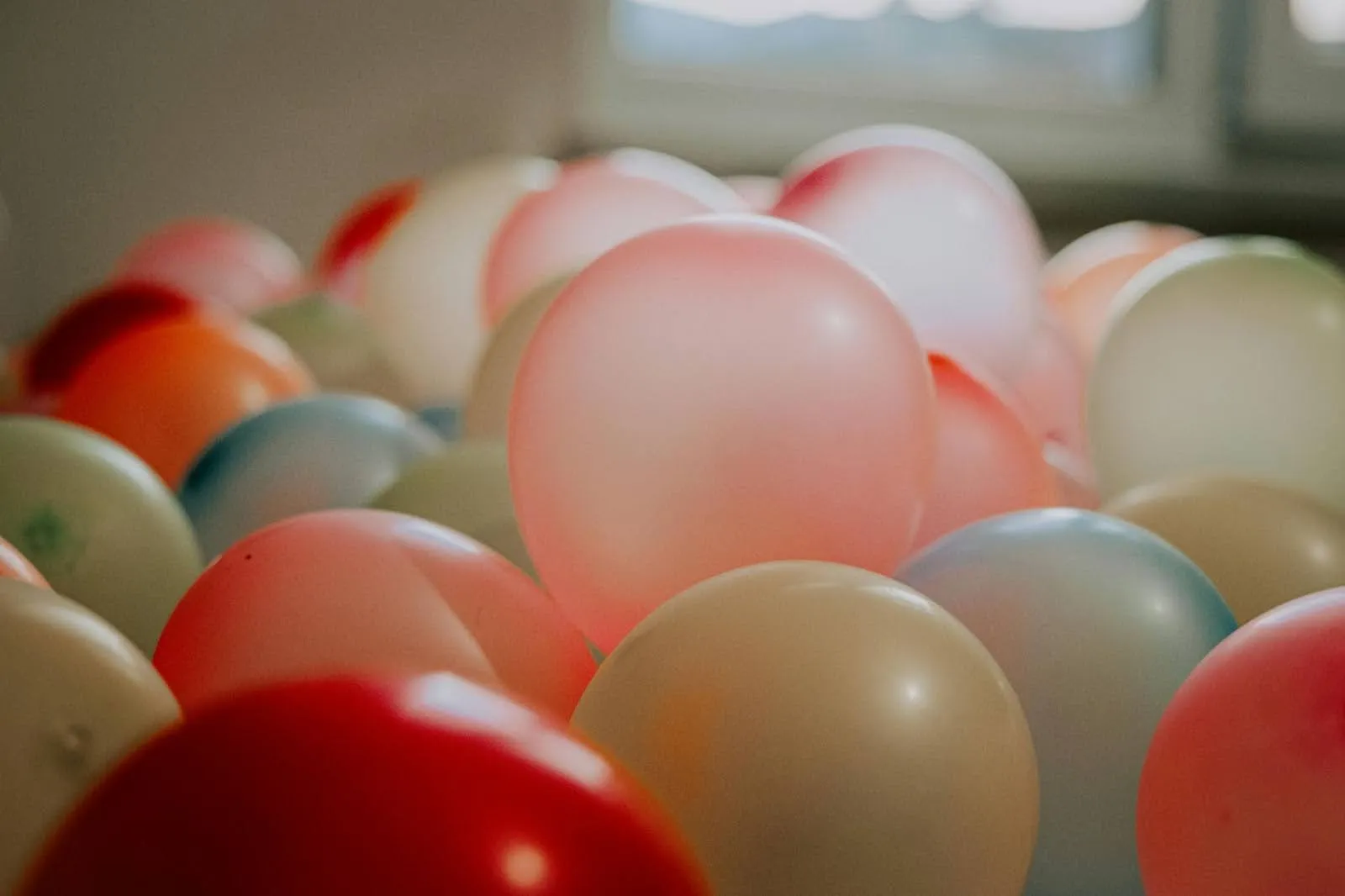
Tying a balloon is simple in theory: stretch the neck, wrap it around two fingers, tuck the nozzle through, and pull. But doing this for a single birthday balloon is very different from prepping a hundred balloons for an arch. That usually equals sore fingers and frustration.
This guide teaches you the best techniques, including how to tie a balloon without pain, how to use a balloon tying tool, and managing helium balloons, so you can prep for your party efficiently. If you prefer skipping the manual labour entirely, BearloonSG offers the fastest free delivery in Singapore for pre-inflated balloons.
The Basics: How to Tie a Standard Latex Balloon
Before you start twisting and pulling, it helps to understand the anatomy of latex balloons. You have the main “body” which holds the air, the “neck” which is the long narrow part, and the “lip” (or nozzle), which is the thick rolled ring at the very end. Understanding these parts will make the instructions much easier to follow.
The following method is the classic “two-finger” technique. It works for almost every standard sized latex balloons, from the small 5-inch balloons to the standard 12-inch party balloons.
Step 1: Inflate and Grip
Start by inflating the balloon. Whether you use a manual balloon pump, an electric pump, or your lungs, do not overfill it. If the balloon looks shaped like a lightbulb or pear, it is overinflated. Let a little air out until it is round.
Once inflated, hold the base of the neck (where it meets the body) firmly with your left hand (if you are right-handed) to seal the air in. Use your right hand to pinch the lip.
Step 2: The Stretch
This is the step most beginners miss. You must stretch the neck. While holding the base with your left hand, pull the lip away with your right hand. You want to create at least 5 to 8 centimetres of slack. If the neck is short and tight, tying the knot becomes a struggle. Stretching the rubber warms it up slightly and makes it more pliable.
Step 3: The Wrap and Tuck
Hold the stretched neck with your left hand. Make a “V” shape with the index and middle fingers of your left hand.
Take the lip in your right hand and wrap the neck over the top of your two fingers, then bring it underneath. You essentially wrap the balloon neck all the way around those two fingers.
Now, take the lip and tuck it through the gap between your two fingers. You are pushing the lip from the palm side towards the back of your hand, passing it under the loop you just created.
Step 4: The Pull
Grab the lip as it pokes through with your right hand. Simultaneously, slide your two fingers out of the loop. Pull tight on the lip while holding the balloon steady. This tightens the balloon knot securely at the base of the neck.
How to Tie a Balloon Without Hurting Your Fingers

If you are planning a large party in Singapore and need to tie 50 or 100 balloons, the method above will eventually cause friction burns or blisters. This is often called “balloon fingers.” To avoid this, you need to change your technique or use assistance.
The “Loose Neck” Technique
The main cause of finger pain is tension. If the balloon is too full, the neck becomes short and tight. To fix this, inflate the balloon, but then let a significant amount of air out, often more than you think is necessary.
By sacrificing a bit of size, you gain a much longer, softer neck. When the neck is loose, you do not have to pull hard to wrap it around your fingers. The knot slides off effortlessly without “snapping” against your skin. This is how to tie a balloon easy when you have a high volume to process.
How to Use a Balloon Tying Tool
A balloon tying tool is a small piece of plastic often included in DIY balloon garland kits. It looks confusing at first, but it is a finger-saver.
- Wear the Tool: Place the tool on the index and middle fingers of your non-dominant hand. The open end of the tool should face you.
- Wrap: Hold the inflated balloon in your left hand. Take the neck of the balloon and stretch it around the nose of the tool.
- Cross Under: Bring the neck underneath and up through the middle.
- Tuck and Pull: Slip the lip of the balloon into the groove of the tool and pull the balloon off. The tool holds the tension for you, so the rubber never rubs against your skin.
Mastering how to use a balloon tying tool will double your speed and save your hands for other tasks, like hanging decorations.
The Water Balloon Method
Water balloons are notoriously small and slippery. Because they are tiny, you cannot easily use two fingers. Instead, create a loop using only your index finger.
Stretch the neck significantly. Wrap it tightly around your index finger. Use your thumb to push the lip under the loop on your finger. Roll the loop off your finger. Because water balloons are wet, the rubber can stick, so do this quickly.
Tying Helium Balloons and Attaching Ribbons
Helium balloons require a different approach because if you let go, you lose the balloon. Additionally, you almost always need to attach a ribbon immediately.
The Standard Ribbon Knot
The safest way for beginners is to tie the balloon first, then tie the ribbon.
- Follow the standard tying method to knot the balloon itself.
- Take your ribbon. Tie a simple double knot around the neck of the balloon, below the balloon knot.
- Pro Tip: Do not tie the ribbon above the balloon knot (closer to the body). It might slip off. Always tie the ribbon between the balloon knot and the lip.
The Pro Method (Knotting with the Ribbon)
Professional decorators use this method to save time. They tie the balloon and the ribbon in a single action.
- Hold the end of the ribbon in your hand alongside the balloon neck.
- Perform the standard wrap-around-fingers movement, but ensure the ribbon is included inside the loop you wrap.
- When you tuck the lip through the loop to finish the knot, the ribbon gets locked inside the balloon’s own rubber knot.
- Pull tight. The ribbon is now fused into the knot and will not slip.
How to Tie a Helium Balloon with Ribbon for Curling
Singaporean parties often feature beautiful curled ribbons hanging from the ceiling. To achieve this:
- Secure the ribbon to the balloon using the methods above.
- Open a pair of scissors.
- Place the ribbon between your thumb and the sharp edge of the scissor blade.
- Apply firm pressure with your thumb and pull the ribbon quickly along the blade.
- Warning: Do this away from the balloon. If the ribbon snaps back or the scissors slip, you will pop the helium balloon instantly.
How to Tie a Foil Balloon Correctly

Foil balloons (often called Mylar balloons) are different. They do not have a stretchy neck. Instead, they have a self-sealing valve. This valve allows air in but stops it from escaping when you remove the pump.
Locating the Valve
Look for a long, flat tab sticking out from the bottom or side of the balloon. This is the tail. The valve is located inside this tail, usually marked by a different coloured slip of plastic.
The Slip Knot Method
Many people mistake the tail for a neck and try to scrunch it up and tie a knot in it. Do not do this. Scrunching the tail damages the self-sealing valve. If you damage the valve, the balloon will leak, and you cannot re-inflate it later.
Instead, tie your ribbon to the tail below the valve opening.
- Inflate the foil balloon until firm. Run your fingers flat across the valve to ensure it is sealed.
- Take your ribbon and tie a gentle slip knot around the tail.
- Do not pull it so tight that it crushes the airway. Just tight enough to hold the balloon.
- This allows you to untie the ribbon later, insert a straw to deflate the balloon, and store it for your next celebration.
Advanced Techniques: Balloon Garlands and Arches
If you want to build a balloon arch or garland, tying balloons individually is inefficient. You need to learn how to tie balloons together for garland construction. This technique creates “duplets” and “quads.”
How to Tie Balloons Together (Duplets)
A duplet is two balloons tied to each other.
- Inflate two balloons to the same size.
- Hold one in each hand by the neck. Do not tie them individually yet.
- Cross the two necks over each other in an “X” shape.
- Stretch the necks and wrap them around each other twice.
- Tie the two necks together in a simple granny knot.
You now have two balloons joined permanently without using any string or wire. This is the building block of all professional decor.
Creating Quads (Clusters of Four)
To make a thick, full garland, you need quads.
- Create two sets of duplets (four balloons total).
- Place the two duplets together so they form a cross shape.
- Push the centres together.
- Take one balloon from one duplet and twist it around a balloon from the other duplet.
- The friction will hold them together in a four-balloon clover shape.
Securing to the Garland Strip
Most DIY kits come with a clear plastic strip with holes in it.
- Take your quad.
- Pull the lip of one balloon through a large hole in the strip.
- Slide it over to the smaller locking hole.
- Repeat this process, adding quads tightly against each other until the strip is full.
How to Tie Long Balloons (Modelling Balloons)
Long balloons, typically known as 260s (2 inches wide, 60 inches long), are used for balloon animals. These are much harder to tie because the rubber is thicker and the pressure is higher.
Letting Out a Little Air
Before tying a modelling balloon, you must “burp” it. Inflate the balloon to the desired length. Then, release a small puff of air. This softens the balloon slightly. If the balloon is rock hard, it will likely pop when you twist it to make a shape or tie the knot.
The Nozzle Wrap
Because the neck is usually very short on these:
- Hold the neck with your thumb and index finger.
- Stretch the neck around your thumb.
- Tuck the nozzle through the loop created by your thumb.
- Slide your thumb out and pull tight.
- Using the thumb provides a solid anchor point that is stronger than just using fingers for these high-tension balloons.
Troubleshooting Common Tying Issues

Even with the best techniques, things can go wrong. Here are solutions to common problems Singaporean parents face.
How to Tie a Balloon with Long Nails
Long fingernails are the enemy of latex balloons. If you pinch the balloon with your fingertips, your nails will puncture the rubber.
To fix this, change your grip. Use the pads of your fingers or the sides of your knuckles. When wrapping the balloon around your hand, keep your fingers straight and flat so the nails do not dig in. Alternatively, strictly use a balloon tying tool, which eliminates the need for your fingers to touch the tightest part of the knot.
Why Do My Balloons Keep Deflating?
If you wake up the next morning and your decorations are sagging, it is usually due to one of three things:
- Loose Knots: You did not pull the knot tight enough to seal the air.
- Cheap Latex: Low-quality balloons are porous. They leak air through the rubber itself over time.
- Temperature: In Singapore, we often move balloons from a hot outdoor environment (delivery) to an air-conditioned room. Cold air causes gas (helium or air) to shrink. This makes the balloon look deflated. Conversely, moving a balloon from AC to hot sun expands the gas, often causing it to pop.
Safety Tips for Parents
While balloons are fun, they pose a serious safety risk. Uninflated balloons or pieces of broken balloons are a leading choking hazard for young children.
Always clean up popped balloon pieces immediately. Store uninflated balloons out of reach of children. If you are tying a lot of balloons, take breaks to ensure your hands do not cramp, which could lead to you dropping small pieces on the floor unnoticed.
Conclusion On How To Tie A Balloon
Tying a balloon is a fundamental party skill, but it requires technique to ensure your decorations last through the humidity of a Singaporean celebration.
Whether you use the classic finger method, a balloon tying tool, or the slip knot for foils, the key is maintaining tension without hurting your hands. However, for large events requiring hundreds of balloons, the physical toll on your fingers can be significant.
At BearloonSG, we believe that every celebration deserves a touch of wonder, a spark of joy, and a heartfelt surprise. We are more than just a gift shop – we are storytellers of celebration, crafting moments that stay with you long after the balloons have floated away.
Still have questions? Feel free to reach out. We’re happy to help you decide whether to DIY your decor or let our experts handle the inflation and installation for a flawless, stress-free event.
Frequently Asked Questions About Tying Balloons
How Do You Tie a Balloon Easily?
The easiest way is to ensure you have enough slack. Inflate the balloon, then let a little air out to lengthen the neck. Stretch the neck around two fingers, tuck the lip through the loop, and roll it off. Using a dedicated tying tool can also make the process effortless.
How Do You Tie a Balloon Step by Step?
- Inflate: Fill the balloon but do not overfill.
- Stretch: Pull the neck to create slack.
- Loop: Wrap the neck around your index and middle fingers.
- Tuck: Push the nozzle through the gap between your fingers.
- Pull: Slide your fingers out and tighten the knot.
How Do You Tie a Balloon Without It Hurting Your Fingers?
To avoid pain, use a balloon tying tool made of plastic. If doing it by hand, ensure you stretch the neck significantly so there is less tension on your skin. Alternatively, wear thin cotton gloves to reduce friction burns, though this may reduce your grip.
Can You Tie a Balloon with Long Nails?
Yes, but you must be careful. Do not use your fingertips. Use the pads of your fingers or the sides of your knuckles to manipulate the balloon neck. A tying tool is highly recommended for those with long nails to prevent accidental popping.
How Do You Tie a Balloon with a Ribbon?
You can either tie the balloon first and then knot a ribbon around the neck, or you can hold the ribbon against the neck and tie them both together in one knot. For foil balloons, always tie the ribbon to the tail tab below the valve, not around the valve itself.
Why Do My Balloons Deflate So Fast?
Balloons usually deflate quickly due to a loose knot or low-quality latex. In Singapore, moving balloons from a hot environment to a cold air-conditioned room will also cause them to shrink and appear deflated. Helium molecules are smaller than air molecules and will escape through the latex material naturally within 12 to 24 hours.